Hal
The Call of the WildHal is one of the three American adventurers who purchase Buck and the exhausted mail team in Skaguay. His importance lies less in any individual achievement than in the disastrous system he embodies: he treats dogs as interchangeable property, reduces Arctic travel to a calculation on paper, and responds to failure with violence. Under his direction, the team’s accumulated labor is converted into suffering, starvation, and death, while his insistence on reaching Dawson carries the travelers onto rotten ice.
Identity and Introduction
Hal is a youngster of nineteen or twenty, conspicuously armed with a large Colt’s revolver and a hunting knife strapped to a belt crowded with cartridges. The belt is described as the most salient feature of his appearance because it advertises his callowness rather than his preparedness. He and Charles are visibly out of place in the Northland, and the reason for their undertaking is presented as part of the mystery of things that passes understanding. Hal enters the narrative at the moment when the Canadian Government sells Buck and his companions after a twelve-hundred-mile mail run with only two days of rest.
Hal, Charles, and Mercedes acquire the dogs, harness and all, for very little. Hal is Charles’s younger relative and Mercedes’s brother; Mercedes is Charles’s wife. Their camp is disorderly, with a badly stretched tent, unwashed dishes, and a sled loaded without method. From the beginning, Hal’s authority is therefore familial and assumed rather than earned. He possesses weapons and confidence, but not the practical knowledge needed to manage a team, judge a trail, or recognize exhaustion.
Incompetence as a Travel Method
Hal’s first attempt to move the sled reveals his governing error. He orders the dogs forward, and when they cannot move the overloaded sled, he calls them lazy brutes and prepares to whip them. The runners are frozen fast, however; an onlooker explains that the sled must first be broken out by shifting weight against the gee-pole. Hal’s failure is not the dogs’ laziness but his inability to distinguish mechanical resistance from animal unwillingness.
Mercedes initially takes the whip from him and pleads for gentleness, but she ultimately defends her brother’s right to drive the team as he thinks best. Hal resumes striking the dogs. After the runners break free, the top-heavy sled overturns on the slope, Hal is pulled off his feet, and the dogs continue through Skaguay with the capsized sled scattering the remainder of the outfit along the street. The citizens catch the dogs, gather the belongings, and explain that the party needs half the load and twice the dogs if it expects to reach Dawson. Hal and his companions listen unwillingly, and their subsequent reduction of the equipment does not correct the deeper problem: they still do not know how to travel.
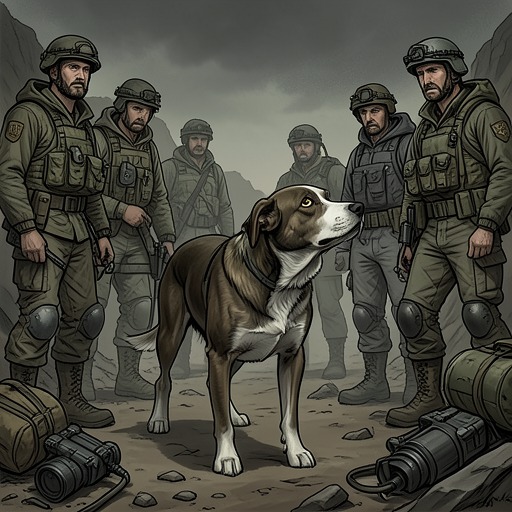
Hal then expands the team to fourteen dogs by buying six Outside dogs, adding them to the six remaining members of the original team and Teek and Koona. He and Charles take pride in possessing a team larger than any they have seen, but they fail to understand that one sled cannot carry enough food for fourteen dogs. Their arithmetic assigns a ration to each animal and projects the journey’s duration, yet it ignores the physical conditions of the trail, the team’s exhaustion, and the food required to sustain such a large group. The scene turns the dogs into figures in a calculation while showing how that calculation conceals their actual labor and bodily limits.
The travelers’ disorder compounds the error. They spend much of the night pitching a slovenly camp and much of the morning loading the sled, often stopping during the day to rearrange the load. Some days they cover fewer than ten miles; on other days they fail to start. They never achieve more than half the daily distance assumed in their dog-food computation. Hal cannot make the dogs travel faster because he and the others cannot make themselves work efficiently, yet he treats the resulting shortage as a problem of obedience.
Violence, Hunger, and the Collapse of the Team
Hal first hastens the food crisis by doubling the ordinary ration. The inexperienced Outside dogs have voracious appetites, and the worn-out huskies pull weakly, leading him to conclude that the standard ration is insufficient. When Mercedes cannot persuade him to give still more, she secretly takes food from the fish-sacks and feeds the dogs. What the animals require is rest, not additional food, and the heavy load continues to drain their strength. When Hal discovers that half the dog food is gone while only a quarter of the distance has been covered, he cuts the ration below the ordinary level and tries to demand longer travel from animals already depleted.
The consequences are immediate and cumulative. Dub, a faithful but frequently punished worker, develops a worsening wrenched shoulder-blade because it is neither treated nor rested; Hal finally shoots him with the Colt’s revolver. The six Outside dogs then die one after another on half the ration that a husky requires: the Newfoundland goes first, followed by the three short-haired pointers and eventually the two mongrels. Their deaths expose the commercial logic governing the expedition. Dogs were bought cheaply, valued for hauling capacity, and discarded when their bodies could no longer produce it.
At Five Fingers, the dog food runs out. Hal trades the revolver for a few pounds of frozen horsehide offered by a toothless old woman. The hide, stripped from horses that had starved months earlier, is hard as galvanized iron while frozen and becomes a mass of hair and thin, unnutritious leather in the dogs’ stomachs. Hal’s equipment has moved from an emblem of masculine readiness to a resource exchanged for an almost useless substitute for food; neither the weapon nor the trade can repair the expedition’s original failures.
Hal’s answer to worsening conditions is his theory that everyone must become hardened. Unable to instill this lesson in Charles and Mercedes, he hammers it into the dogs with a club. Buck staggers at the head of the team, falling whenever he can no longer pull and rising only when the whip or club drives him up. His coat loses its stiffness and gloss, his muscles waste into strings, his flesh pads disappear, and each rib and bone shows through loose, empty skin. The remaining dogs become little more than bags of bones in which life flickers faintly. Hal’s violence does not produce endurance; it converts fatigue into collapse.
Mercedes’s repeated riding adds another burden. Weighing one hundred and twenty pounds, she insists on sitting in the sled for days, and the weakened dogs eventually fall in the traces while the sled stands still. When Charles and Hal remove her by force, she sits down and refuses to move, forcing them to unload the sled, return for her, and put her back on it. Her weight becomes part of the material load, while her quarrels with Hal and Charles intensify the party’s inability to cooperate. Hal’s authority is thus both brutal and ineffective: he can strike the animals, but he cannot organize the people or regulate the expedition.
The Confrontation at White River
By spring, the natural world is awakening around them. Sunlight lengthens the days, plants bud, birds return, streams begin to run, and the Yukon strains against its ice. Against this abundance of renewed life, Hal, Charles, Mercedes, and the remaining huskies stagger toward John Thornton’s camp at the mouth of the White River. The contrast makes the human expedition appear not heroic but terminal: the land is recovering while the travelers and animals are being consumed by their own mismanagement.
John Thornton warns Hal that the trail is rotten and that the ice may give way at any moment. Hal answers with a sneering confidence born of survival so far, insisting that the party will continue to Dawson. He uncoils his whip and orders Buck to rise. The team does not respond because it has passed beyond the stage at which ordinary commands are sufficient; the whip must be used merely to rouse the animals. Solleks, Teek, Joe, and Pike struggle painfully to their feet, but Buck makes no effort. Unlike the others, he has decided not to rise.
Buck senses impending disaster in the thin, rotten ice beneath the trail. He is nearly insensible from starvation and beating, and the club’s blows become distant, but his refusal is deliberate. Hal exchanges the whip for the heavier club and strikes him repeatedly. The scene reveals the final limit of Hal’s doctrine: hardness cannot compel a body whose strength has been exhausted, and punishment cannot overcome an animal’s perception of mortal danger.
John Thornton then springs upon Hal and hurls him backward. He is too enraged to speak at first, but finally warns that another blow will cost Hal his life. Hal claims that Buck is his dog and threatens Thornton with the hunting knife. Thornton knocks the knife from his hand with an axe-handle, knocks it away again when Hal tries to recover it, and then cuts Buck’s traces. Hal has no fight left, while Buck is too near death to be useful as a hauling animal. The weapon that once displayed Hal’s confidence cannot secure either his authority or his property.
Consequences and Significance
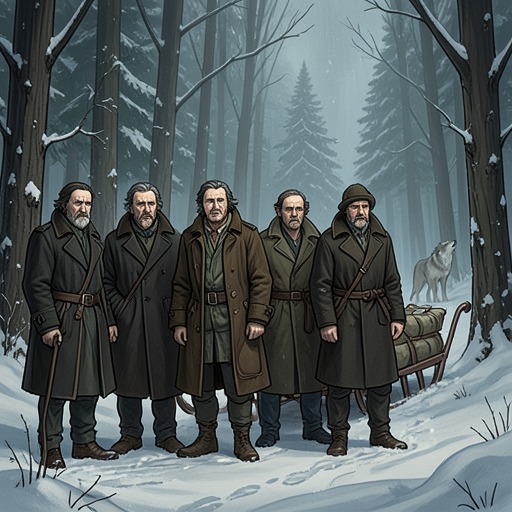
Hal, Charles, Mercedes, and the surviving dogs leave the bank. Pike leads, Solleks pulls at the wheel, Joe and Teek limp between them, Mercedes rides the loaded sled, Hal guides at the gee-pole, and Charles stumbles behind. Buck watches as John Thornton examines him and finds only bruises and terrible starvation. Moments later, the rear of the departing sled drops into the ice. Hal is jerked upward while Mercedes screams; a whole section of ice gives way, and the dogs and humans disappear into the opening. The warning Hal rejected becomes the expedition’s ending: the bottom literally drops out of the trail.
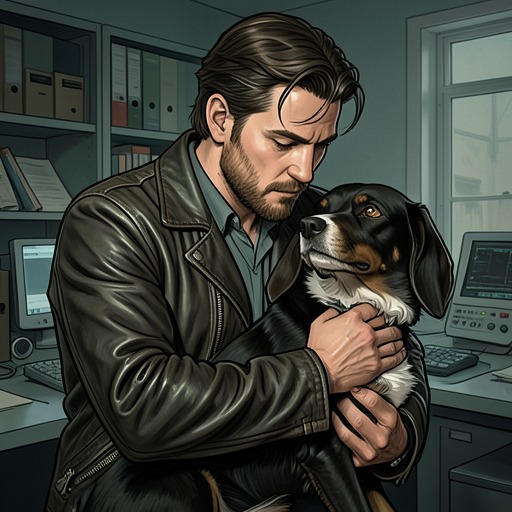
Hal’s narrative function is therefore a concentrated study in destructive confidence. He begins with money, weapons, and the assumption that the North can be mastered by will. He ends stripped of effective control, unable to move an exhausted dog without violence, unable to heed expert advice, and carried toward death by the very route he insists on taking. His treatment of Buck also marks the difference between ownership and stewardship. Hal calls Buck his dog, but John Thornton recognizes the animal’s suffering and intervenes at the cost of open conflict.
The contrast with competent handlers is decisive. Perrault and Francois understand harness work, trail conditions, and the dogs’ specialized labor; they demand effort but also read the team and keep it functioning. Hal sees only a numerical arrangement of dogs, rations, miles, and days. His fourteen-dog team becomes an emblem of commodity reasoning detached from material reality: the animals are counted, priced, bought, overworked, underfed, and replaced, while their exhaustion remains invisible until it becomes death. In this structure, Hal is not merely an unpleasant individual but the human face of a frontier economy that measures transport capacity more readily than animal life.